
Platform-Specific Integration
.jpg?width=48&height=48&name=VW%20profil%20fra%20NM%20(2).jpg)
Meetings don’t happen inside your organization
Based on real-world usage patterns, it’s clear that a large portion of meetings now include participants outside the host organization.
They involve:
And those external participants don’t use your platform. They use theirs. That alone creates a multi-platform environment:
But what’s less visible is that the complexity goes even deeper.
It’s not just multi-platform. It’s multi-cloud.
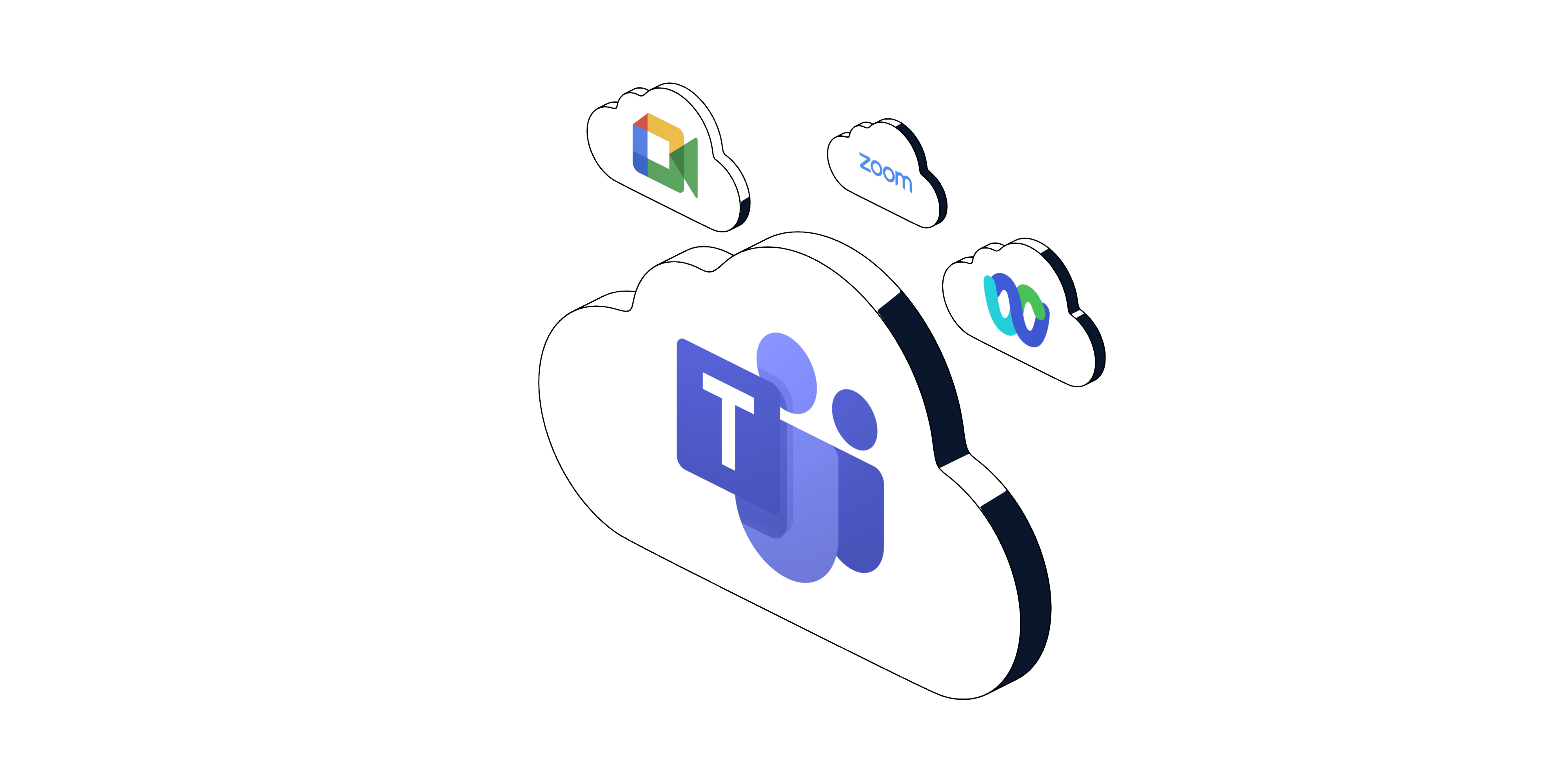
Even within a single platform like Microsoft Teams, there isn’t just one environment. There are multiple cloud instances, including:
These environments exist for good reasons like security and compliance. But they also introduce boundaries.
From a meeting perspective, this means:
When you combine this with Zoom and Google Meet, it may feel complex, but it reflects how modern collaboration is structured.
What the data shows
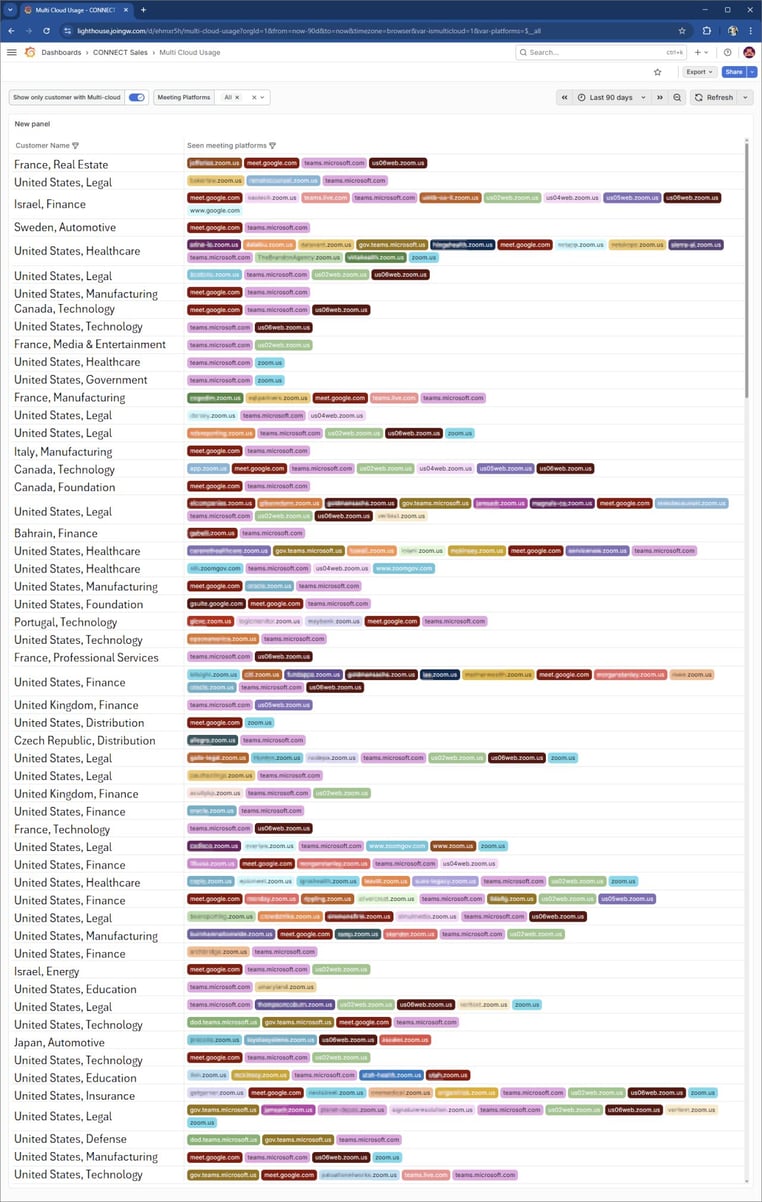
Looking at real customer usage, a clear pattern emerges: The same organization regularly joins meetings across:
And often all of this happens within a short period of time. This is not an exception. It is how modern collaboration works.
Below pic: A snap shot of 50 clients and the different meeting platforms they connect to.
Meetings are becoming access points, not platforms
From the user’s perspective, the expectation is simple: If I have a meeting link, I should be able to join. There is no expectation to understand:
The meeting is no longer tied to a specific system. It’s an access point into a conversation.
Planning for what comes next
Another important factor is time. The platforms we use today are not the final set. New services will emerge. Some will be industry - specific. Others will solve new types of collaboration.
But one pattern is consistent: New meeting platforms are delivered through web technologies.
That means:
This changes how organizations should think about interoperability.
If meetings continue to:
Then the most reliable approach is not to optimize for one platform. It is to ensure access to all of them. This is where web-based interoperability becomes important. Instead of building point-to-point integrations for each platform and variant, the focus shifts to:
Supporting the reality, not the assumption
The goal is not to eliminate platform diversity. It is to make it irrelevant for the user. Whether the meeting is:
The experience should be consistent: Join the meeting. Participate fully. Move on.
Final thought
The idea of a single-platform meeting strategy made sense when collaboration was mostly internal. Today, collaboration is external by default. That brings multiple platforms, multiple clouds, and ongoing change. The organizations that adapt are not the ones that choose the “right” platform. They are the ones that make all platforms accessible.